Seven years ago, while working as an NHS dentist, I found myself fighting a battle not just against tooth decay, but against a lack of information. We treated, we advised, but once the patient left the chair, the connection was broken.
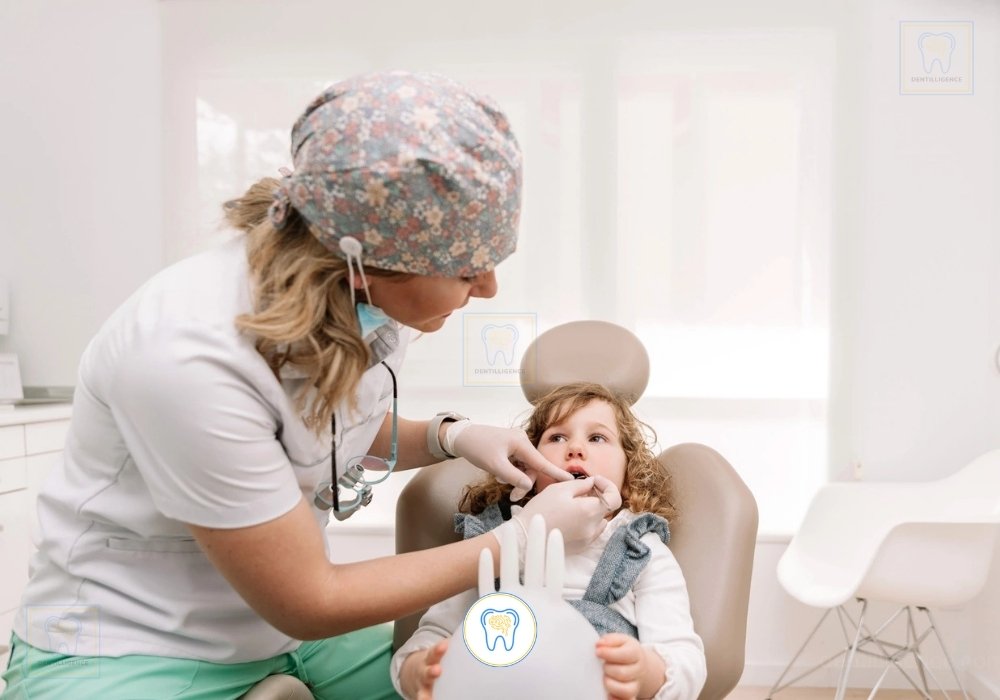
One specific case from that time stays with me to this day. It is the reason I believe we need change.
I saw a young mother and her toddler. The child had multiple cavities. A diet history at the time revealed the culprit: squash and flavoured sugar-free drinks. We stabilized the teeth, and I gave the standard, crucial advice: “Switch to water and healthy food.”

Three months later, they returned. The mother was beaming. She proudly told me she had banished the squash; her son now only drank water and milk. She believed she had done everything right.
But upon examination, I found new cavities.
Heartbroken, we dug deeper. It turned out the “healthy” routine involved a bottle of milk right before sleep. I had to explain that lactose is a sugar, and because it was the last thing on the child’s teeth before sleep, it caused decay just like candy.
That mother wasn’t negligent; she was uninformed. She lost the battle because she didn’t have the right weapon: accessible knowledge.

Even back then, it was clear that relying solely on a 15-minute appointment was not enough. Countless families were losing their teeth to preventable causes simply because they couldn’t ask a quick question or check a fact from home.
This experience highlights why the NHS needs a digital revolution. Imagine if that mother had had an app in her hand back then—a tool like Dentellingence.
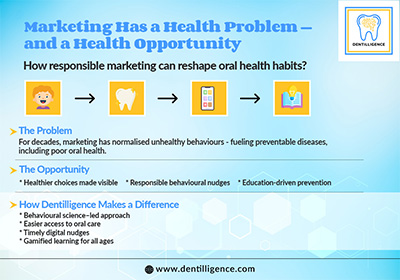
Direct Access: A way to message a dental nurse with concerns immediately, rather than waiting months for a follow-up.

Simple Education: Easy-to-access facts—like the “lactose at bedtime” rule—explained simply and clearly.
Everyone has a mobile phone these days. If we can put the dental team in a patient’s pocket, we can prevent the heartbreak I saw that day. The NHS is doing its best, but with Dentilligence, it could be so much better.