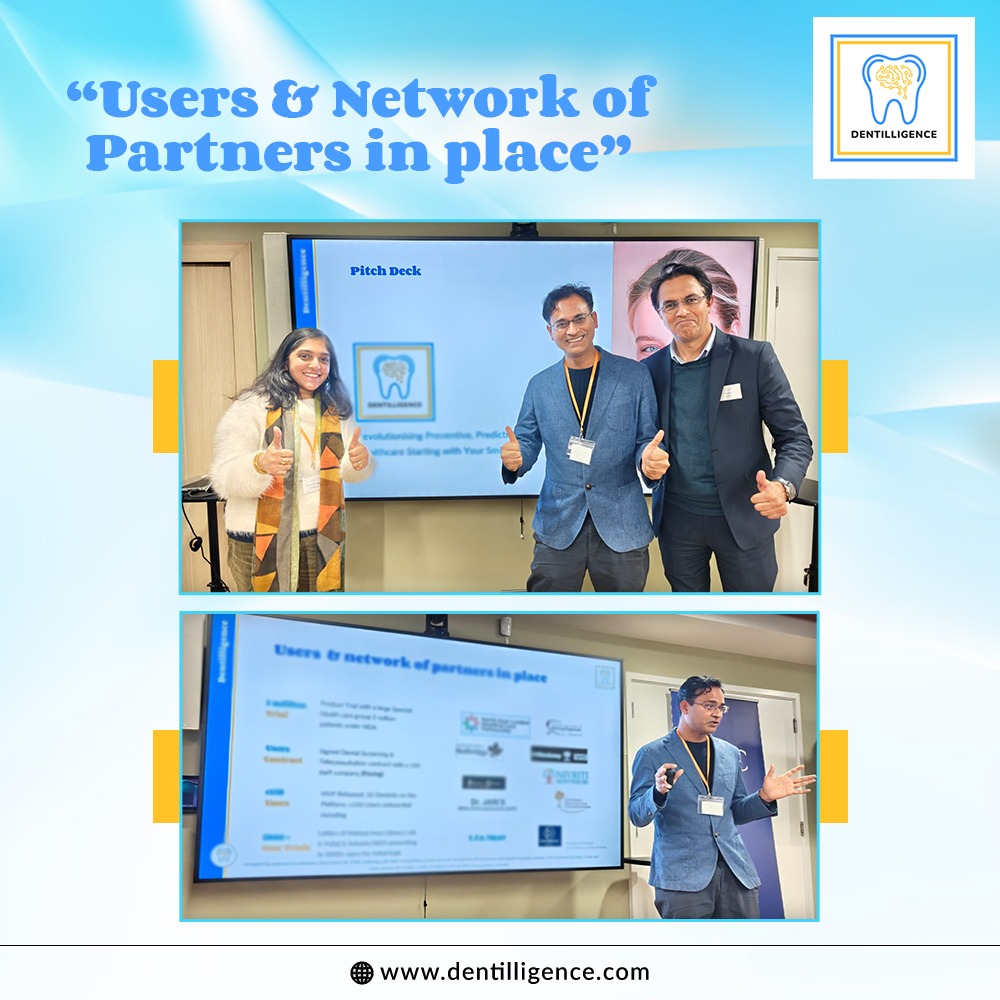
Recently Dentilligence was presented at HEC UK House, in a setting that brought together entrepreneurs, investors, and alumni from HEC Paris and the University of Cambridge. The session provided an opportunity to share our thinking on preventive health, oral health as an early signal of systemic risk, and the responsible use of AI in real-world health systems.
What made the discussion particularly valuable was the quality of engagement. The conversation quickly moved beyond technology into questions around prevention, behaviour change, equity, and how digital health solutions can be designed to work within public health and community contexts—not just clinical environments. These are exactly the challenges Dentilligence is built to address. The feedback reinforced a recurring theme: while AI capabilities are advancing rapidly, the real opportunity lies in deploying them upstream, where early detection, education, and engagement can reduce downstream health burden and costs. There was strong interest in how oral health—often overlooked in population health strategies—can act as a practical and scalable entry point for preventive care.
We also received thoughtful questions around governance, ethics, and adoption across different health systems, particularly in the UK and India. These discussions echoed our own priorities: building responsibly, working alongside clinicians and public-health stakeholders, and ensuring that technology augments—not replaces—existing care pathways. We are grateful to the CAMentrepreneurs , HEC UK House, community and the entrepreneurs and investors who engaged so openly. These conversations help sharpen our approach and reaffirm the importance of building preventive health solutions that are clinically grounded, culturally relevant, and designed for scale.
As Dentilligence continues to evolve, insights from forums like this play a critical role in
shaping how we translate innovation into meaningful health impact.