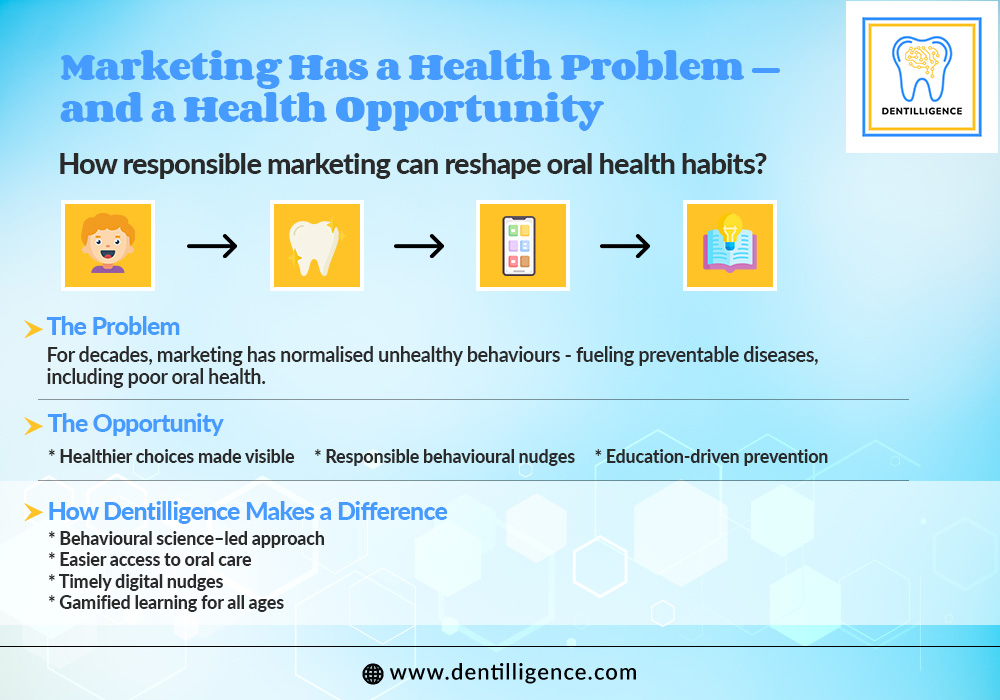
Marketing’s influence on society is undeniable—and controversial. History offers sobering examples of how it has been misused: tobacco advertising that obscured health risks, or the persistent promotion of high-sugar, low-nutrition foods to children. These campaigns did more than sell products; they normalised behaviours that now underpin major public health challenges, including widespread dental decay.
Yet marketing itself is neither good nor bad. It is a powerful neutral force. When applied responsibly, it can shape environments where healthier behaviours become easier, more intuitive, and more socially reinforced. The movement to restrict junk food advertising during children’s viewing hours demonstrates this clearly: informed use of marketing insight helped change exposure, reduce harm, and support prevention at scale.
This insight underpins Dentilligence’s approach. The platform applies behavioural science, education, and accessibility to oral health—using marketing principles not to create demand, but to support better habits. Online booking lowers access barriers; AI-enabled image insights provide timely nudges; and gamified education uses stories, challenges, and feedback to make prevention engaging rather than burdensome for both children and adults.
Dentilligence does not market treatment—it markets wellbeing. Sustainable improvements in population oral health require collaboration. Schools can integrate playful, measurable oral-health learning into everyday education. Employers can embed prevention into workplace wellbeing programmes. Public bodies, including the NHS in the UK and Ayush in India, can use digital platforms like Dentilligence to deliver targeted, cost-efficient health messaging at scale.
When marketing is aligned with public health goals, it becomes a force not for consumption—but for prevention.